A ney is not one instrument but a family. Each ney is built in a particular key, so most players eventually own several. If you are choosing your first, or adding to a set, the key you pick shapes how it feels in your hands and where it fits in the music.
This guide explains the seven standard Arabic keys, how length changes pitch and finger stretch, and which key suits beginners and ensemble players.
The Seven Standard Arabic Ney Keys
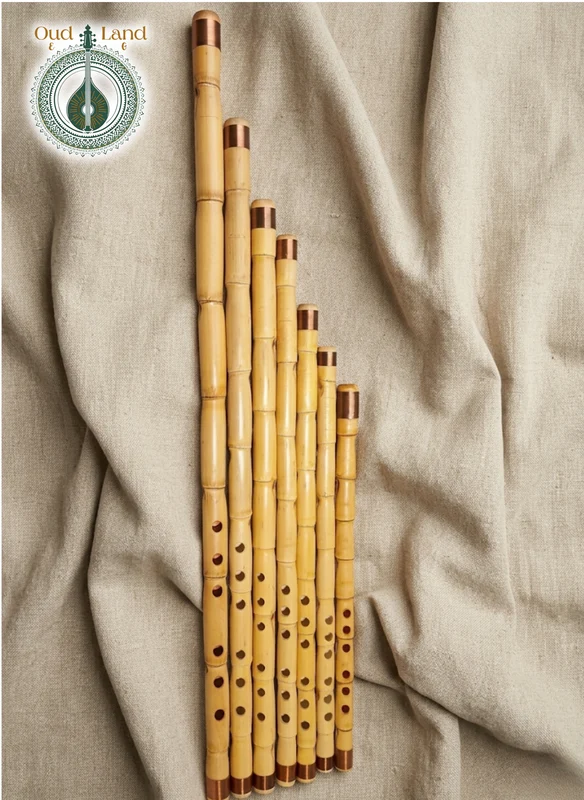
From the longest and lowest to the shortest and highest, the seven keys are listed below. Lengths are approximate and vary from maker to maker, because every ney is cut from natural reed.
- Rast (C): the longest and lowest, about 67 cm.
- Dukah (D, also spelled Doka): the most common key, about 60 cm.
- Busalik (E, also spelled Buselik): about 54 cm.
- Jaharkah (F): about 50 cm.
- Nawa (G): about 48 cm.
- Husayni (A): about 40 cm.
- Ajam (B or B♭): the shortest and highest, about 36 cm.
How Length Affects Pitch
A ney is an open tube, so the longer it is, the lower the note it makes. That simple rule explains the whole family.
- Long neys (Rast, Dukah) sound deep, breathy and full, with a dark, mournful quality.
- Medium neys (Busalik, Jaharkah, Nawa) balance warmth with clarity.
- Short neys (Husayni, Ajam) sound bright and penetrating, and ask for a finer, steadier breath.
Length and Finger Stretch
Length changes how the ney feels in your hands, not just how it sounds. The finger holes sit further apart on a longer ney.
- Long neys need a wider reach and a more relaxed arm position. Players with smaller hands may find Rast difficult, and Dukah demanding at first.
- Medium neys are comfortable for most adults.
- Short neys are easy to reach, but the holes are close together, and small changes in breath move the pitch more.
Best Key for Beginners
For most beginners we recommend Dukah (D). It is the most widely used ney, so lessons, recordings and tutorials almost always assume it. At about 60 cm it is manageable for most adults, and it lets you play a large part of the Arabic repertoire.
If the reach feels too wide, a medium ney such as Busalik (E) or Jaharkah (F) can be a friendlier start. Many teachers suggest starting with a single, well-made ney rather than a set, and adding keys as your playing grows.
Best Key for Ensemble Players
In an ensemble, the right key is the one that matches the music and the people you play with. Ask your bandleader or singer which keys they use, and choose accordingly.
- Dukah is the workhorse and a safe first choice.
- Busalik, Jaharkah and Nawa give you the keys you need for most singers and ensemble pieces, and are the next step after Dukah.
- Rast adds depth for slower, lower and more solemn music.
- Husayni and Ajam suit high voices and bright, lively passages.
Professional players often carry a set of four to seven neys. If you perform regularly, a core set of Dukah, Busalik and Jaharkah or Nawa will cover a great deal.
A Note on Pitch
Every ney is handmade from natural reed, so its exact pitch varies slightly from one instrument to the next. If you need a specific reference pitch, such as 440Hz or 432Hz, tell us when you order and we will do our best to match it.
Quick Decision Guide
- First recommendd ney: Dukah (D).
- Smaller hands or a tighter reach: Busalik (E) or Jaharkah (F).
- Playing with a singer or band: match their key.
- Deep, solemn sound: Rast (C).
- Bright, high sound: Husayni (A) or Ajam (B♭).